 01crew
Change course
Lagoon Scout
Before rolling, inspect the top current card. Leave it in place or move it to the bottom of the deck.
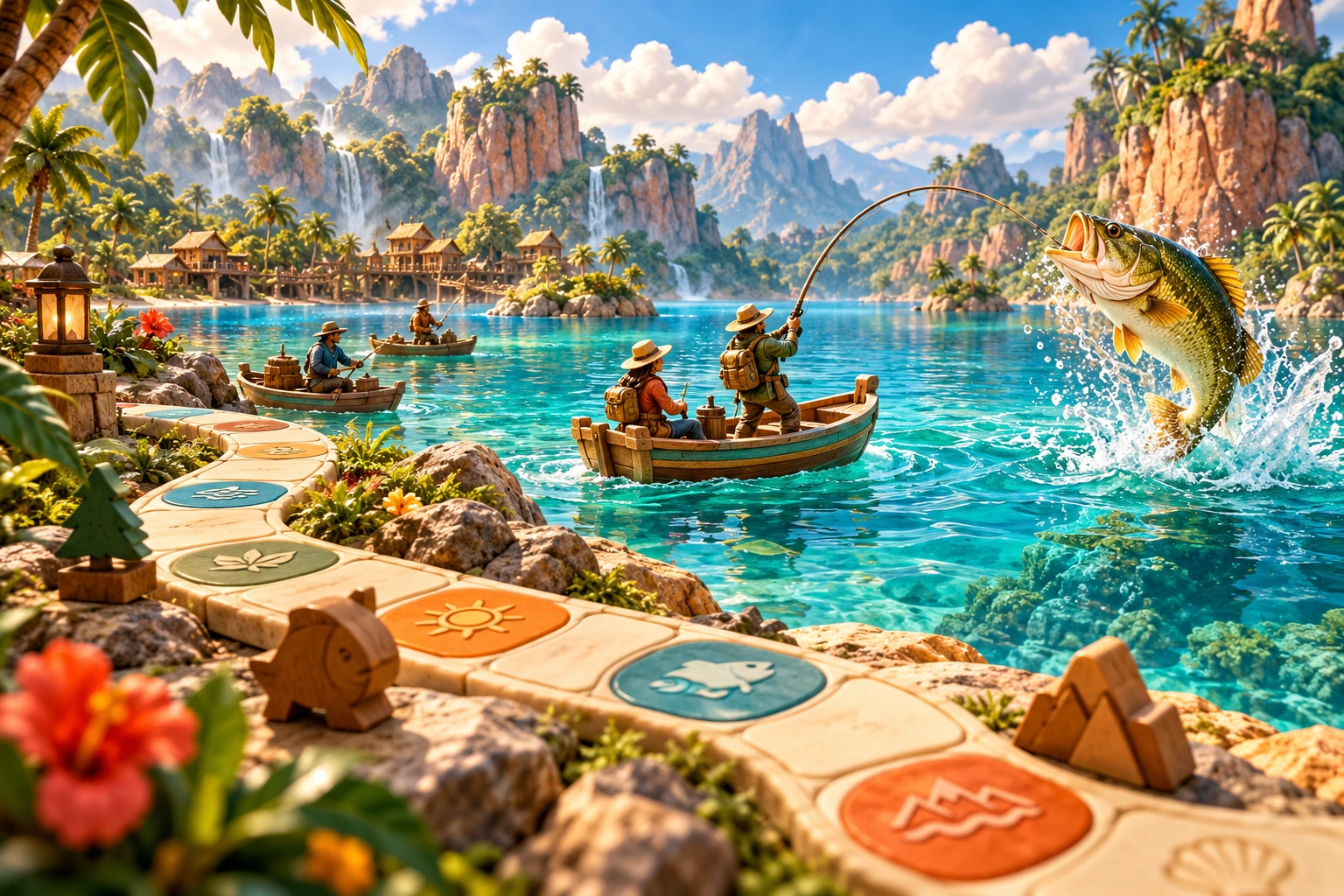
Turn the lagoon into your next game night. Follow the current, build a clever tackle hand and bring your best catch back to the dock.
 THE WORLD ON YOUR TABLE
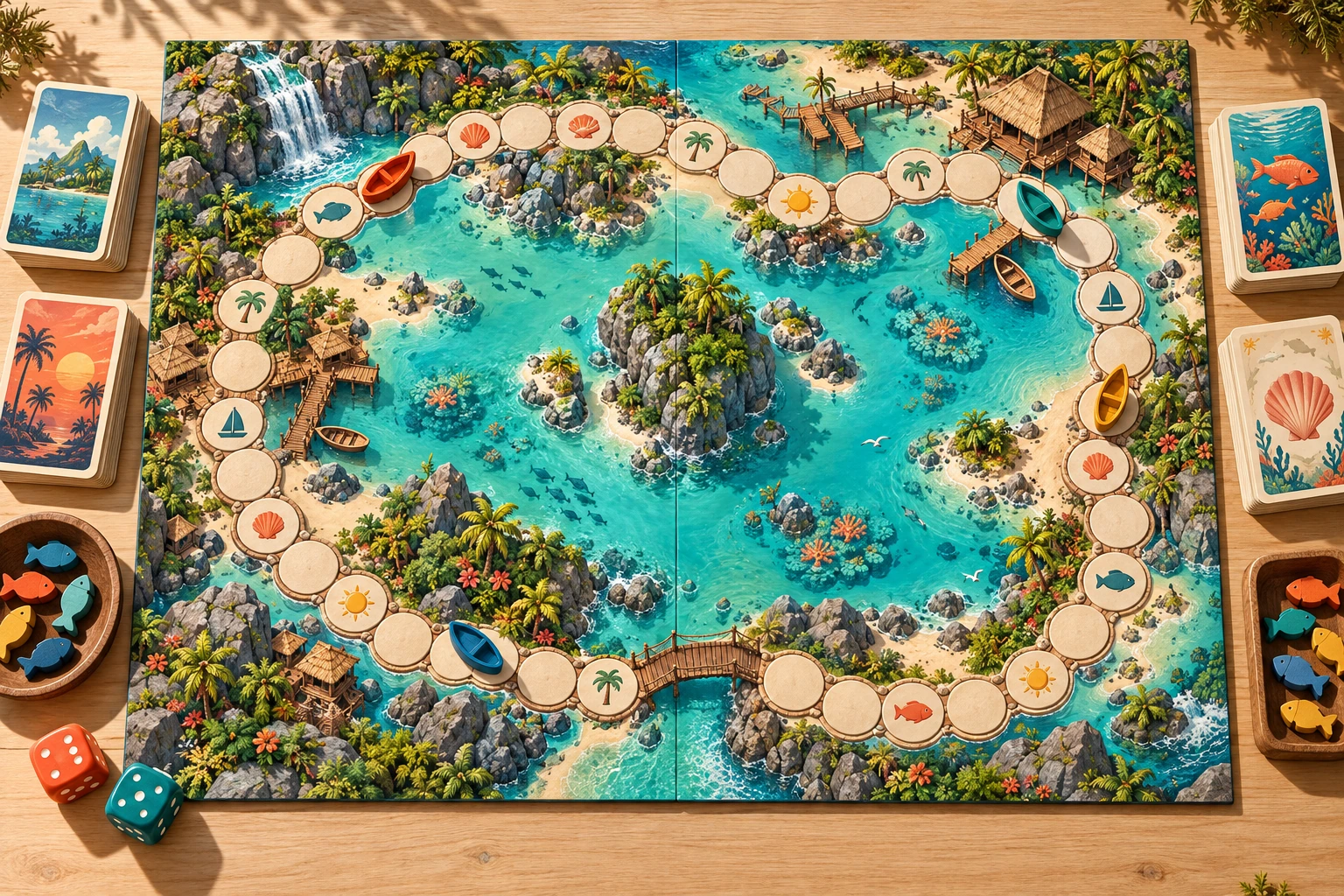
Reef, channel and mangrove spaces each favour a different lure. The four jetties let you deliver the fish in your hand. Passing a jetty is easy; choosing to stop is the interesting part.
Clear water, bright fish and a chance to build a valuable mixed catch.
A deep seam through the lake. Keep a spoon ready before you follow it.
The sheltered route rewards the player who prepared for quieter water.
01crewBefore rolling, inspect the top current card. Leave it in place or move it to the bottom of the deck.
 02tackle
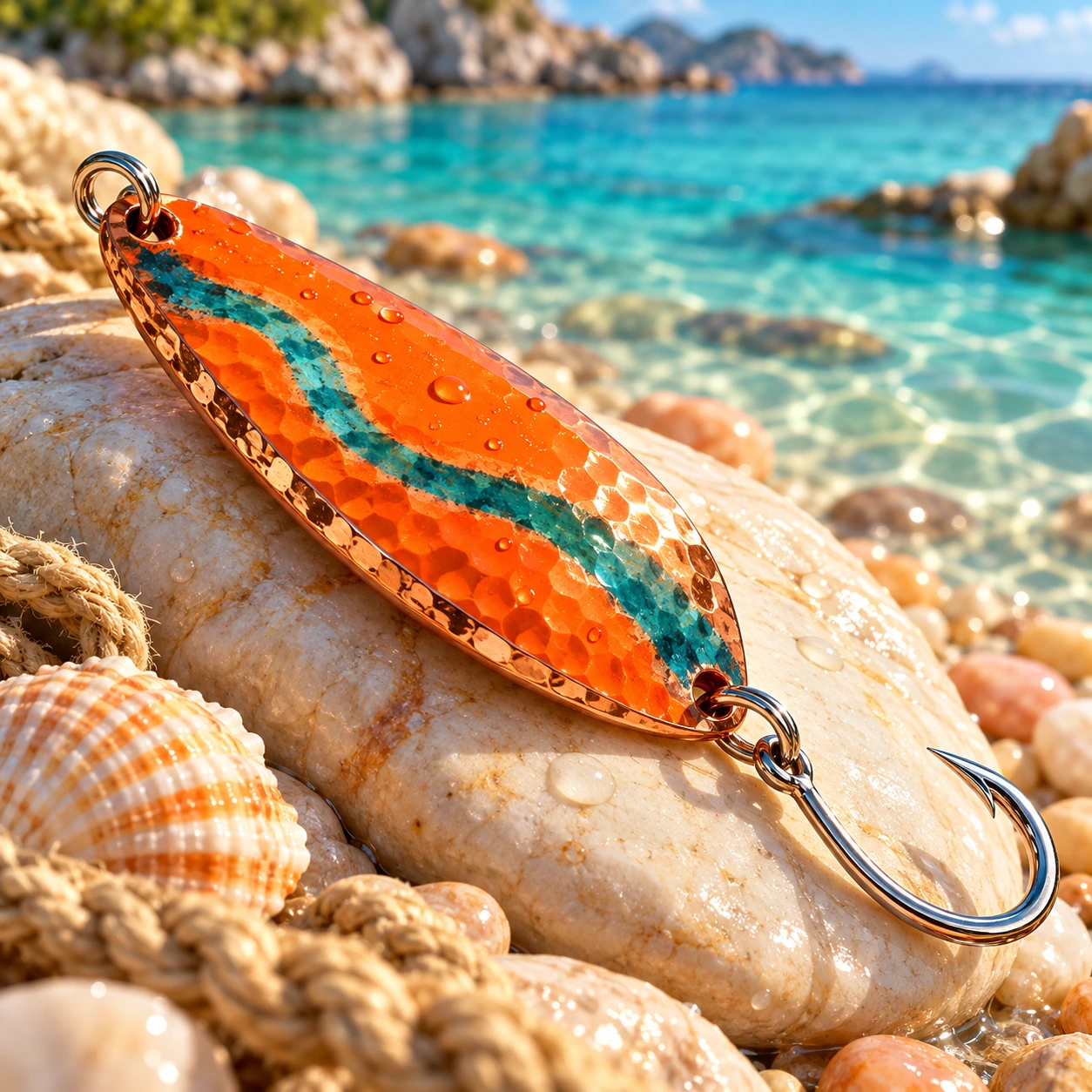
Spend this lure at a channel space to take a channel catch. It stays in the discard pile until the lure deck is reshuffled.
 03catch
Deliver this catch at a jetty for three points. At the end of the game, an undelivered bass is worth only one.
A complete lap is optional. Eight rounds, a well-timed delivery and a few thoughtful detours decide whose logbook tells the best fishing story.
Roll a three-sided movement die, or a standard die with 1–2 meaning one step, 3–4 two steps and 5–6 three steps. Move clockwise.
On a habitat, spend its matching lure to take a catch of that habitat. Instead of casting, draw two lures and keep one. On a jetty, you may deliver any catches.
Bank the printed value of delivered fish. Keep at most five catches and four lures; return excess cards to their discard piles. Pass play clockwise.
A round ends after everyone has taken a turn. After round eight, deliver any remaining catches for one point each, regardless of printed value, then compare totals.
Collect the reef, channel and mangrove scatter symbols shown on catches you deliver. Return one of each symbol to take a free one-space move immediately. Resolve that space normally. A ripple cannot trigger another ripple during the same turn.
See it in the rules GOOD
GOODChoose the personality you like; all boats begin with the same rules and resources. Character portraits add flavour without making one player stronger than another.
 Palm-Squall Crossing
The next player moves one fewer space, to a minimum of one. Discard the current after it affects that turn.

The dockkeeper likes a varied story.
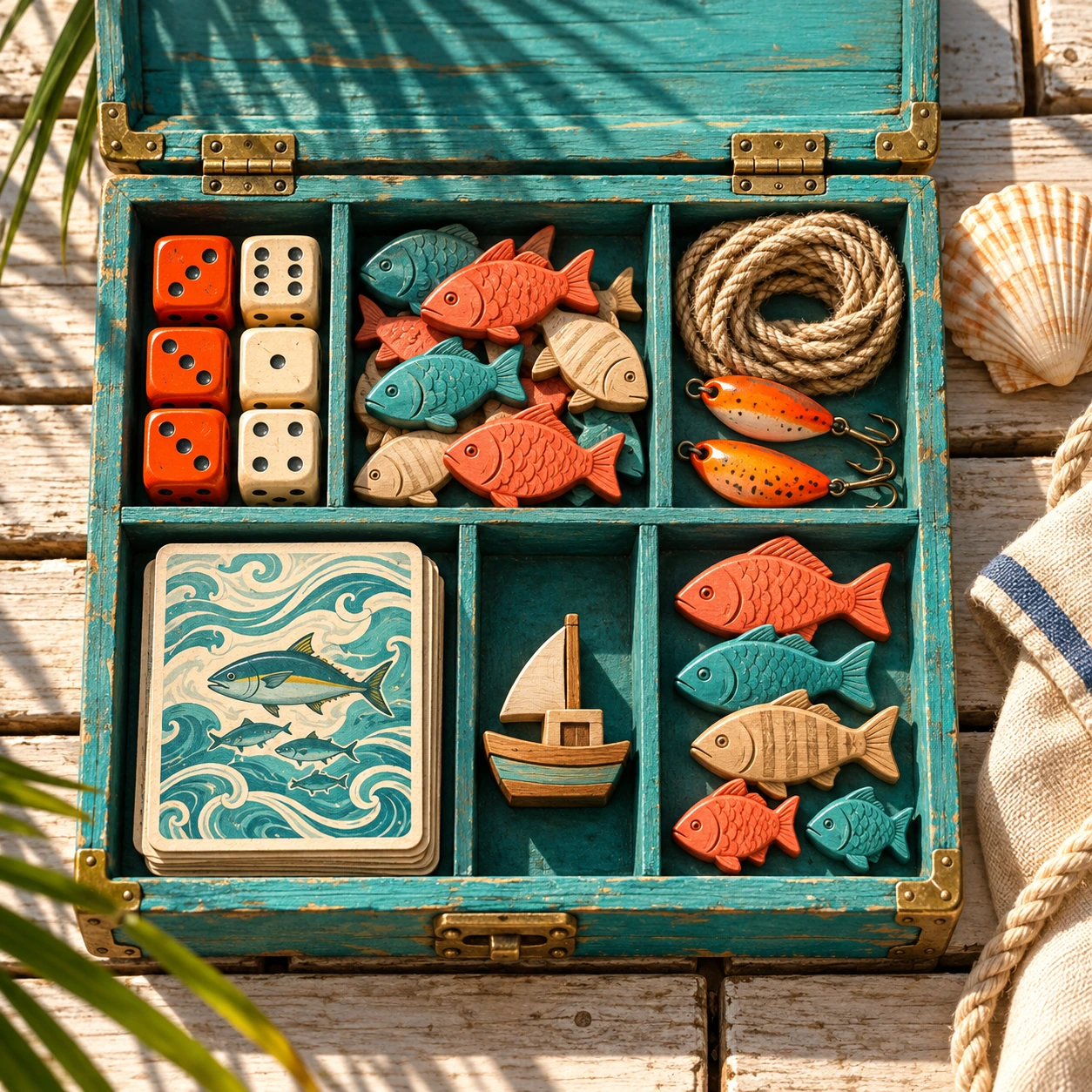
The proposed table kit contains the route board, four boat markers, a movement die, the three decks, habitat scatter counters and a logbook score sheet. Use ordinary counters and a paper track when trying the concept at home.
Try the movement part of a turn. The example boat starts at the home jetty; each roll advances it around the twelve-stop route. Cards and scoring stay outside this short demonstration.
Your boat is at the home jetty. Roll to explore the route.
No. Tidebound Table is a fan-made tabletop design concept with its own rules. The name identifies its inspiration; this website is not the publisher or an official game service.
Only the three habitat colours. The matching lure icons do the practical work, while the names give the table a little character.
Shuffle that deck’s discard pile to form a new deck. If no discarded cards are available, choose the resupply option or deliver what you already hold.
Yes. Read a normal six-sided die in pairs: one or two moves one space, three or four moves two, and five or six moves three.

Learn the route, meet the deck and bring the lagoon to the table. The next good decision might be one jetty away.
Bring the rules to the table